

Escalation in the Middle East has nullified all peace agreements, and the United States has openly threatened to completely destroy Iran in the event of further armed provocations.
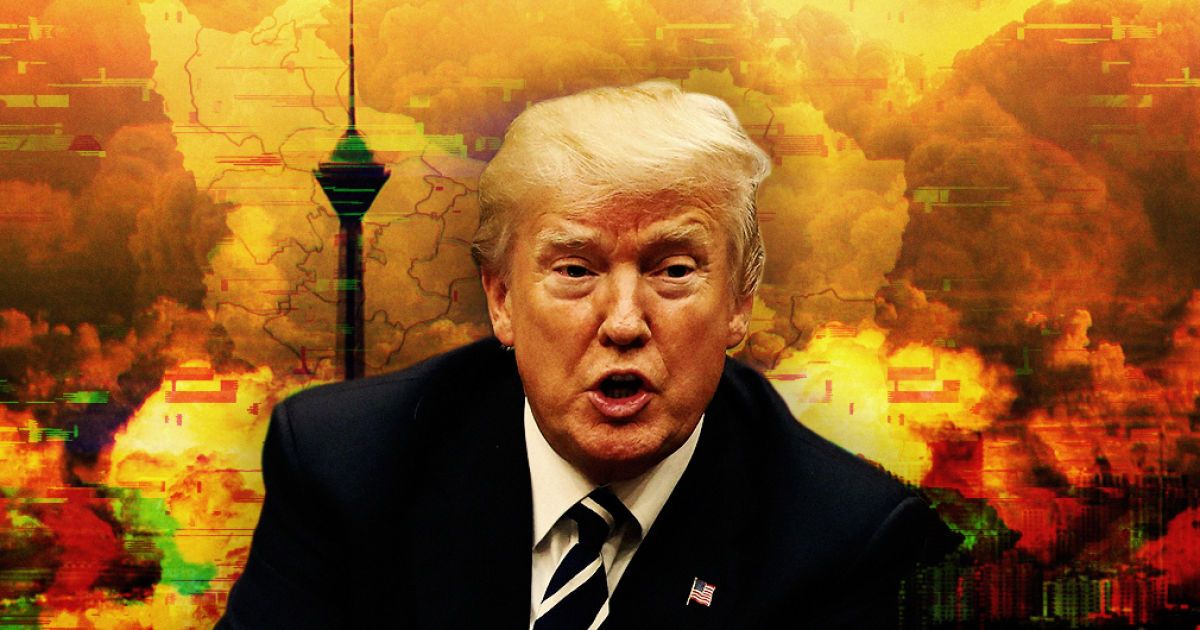
US President Donald Trump threatens to destroy Iran / © TSN.ua
The Iranian armed forces launched massive drone and ballistic missile strikes on the territories of Kuwait and Bahrain. This targeted attack was a direct military response to the previous bombings of Iranian strategic infrastructure by the United States of America.
This is reported by AP news.
The main targets for aerial terror were the locations of American military bases in these neighboring Arab countries. Such radical actions by the aggressor have jeopardized the final collapse of all current negotiations for a lasting truce in the Middle East.
Conflict over the Strait of Hormuz
Attempts by the international community to open a new safe route off the coast of Oman provoked this fierce armed confrontation. The Iranian side categorically insists on its sole right to control the strategic strait, through which a fifth of the world’s energy resources are traditionally transported. In an effort to stop the movement along the alternative corridor, the Iranian military has already attacked commercial vessels twice.
These incidents seriously undermine the previous memorandum, which gave the parties sixty days to agree on the terms of a long-term peace. Diplomatic discussions were intended to resolve critical issues regarding free passage of ships, lifting of economic sanctions, and the future of enriched uranium reserves. Now, targeted armed attacks risk completely torpedoing the peace agreement before its final signing.
“Any interference in this matter, any attempt to establish new arrangements will only lead to further complications, delay the opening of the Strait of Hormuz and increase the level of tension,” said Iranian Foreign Minister Abbas Araghchi.
Consequences of attacks on neighboring states
During the night shelling, Kuwait’s air defense systems successfully intercepted two ballistic missiles, avoiding casualties and large-scale destruction. The official target of this attack was Al-Asad Airbase, where numerous US army units are traditionally stationed. Meanwhile, in Bahrain, an eight-story residential building near the international airport suffered serious damage, with the top floor completely destroyed.
This Arab state is the permanent base for the US Fifth Fleet, whose headquarters has repeatedly been targeted during the prolonged conflict. The local Ministry of Foreign Affairs sharply condemned the armed attack, calling it a deliberate and systematic act of aggression against the sovereignty of the kingdom. Official representatives emphasized that such destructive actions by Tehran are not an accidental isolated incident.
Mutual strikes and destruction of infrastructure
The current escalation was preceded by a successful operation by American forces, which carried out powerful strikes on Iranian military infrastructure. The military destroyed important surveillance systems, communication nodes, and large drone storage depots. This harsh response followed the aggressor’s audacious attack on the commercial tanker Kiku, which was transporting crude oil for Qatar.
US President Donald Trump reacted sharply to the violation of the agreements, publicly confirming the destruction of Iranian radar stations. He emphasized that the patience of the American side is rapidly running out, and further provocations will receive an extremely destructive military response. The head of the White House warned of readiness to use maximum force to finally end this confrontation.
“If that happens, the Islamic Republic of Iran will cease to exist. We will be forced to finish this job militarily,” Donald Trump wrote on the social network Truth Social.
Ultimatums and the threat of a major war
Responsibility for the rocket terror was officially claimed by the Islamic Revolutionary Guard Corps, which controls the country’s entire ballistic missile arsenal. This elite military formation is subordinate solely to Supreme Leader Ayatollah Mojtaba Khamenei and currently holds maximum influence in the state. The military leadership directly threatens to completely halt all ongoing negotiation processes if military actions by the US continue.
For their part, the American military command clearly articulated that the aggressor had a real chance to adhere to the ceasefire agreement but consciously chose the path of confrontation. According to tracking systems, the attacked tanker Kiku was trying to use the safe international route near the coast of Oman to bypass Iranian territorial waters. Such targeted attacks on merchant vessels make the prospects for a peaceful resolution of the conflict increasingly remote.
Recall that Iran attacked a vessel in the Strait of Hormuz with drones. Despite the fact that the ship sustained significant damage as a result of the impact, it was still able to continue its movement along the designated course.
Comments Sort: New Old Popular Send