

The U.S. promise to allow Ukraine to produce Patriots does not mean that interceptors will appear quickly. Launching production requires technology, equipment, certification, and a complex supplier chain.
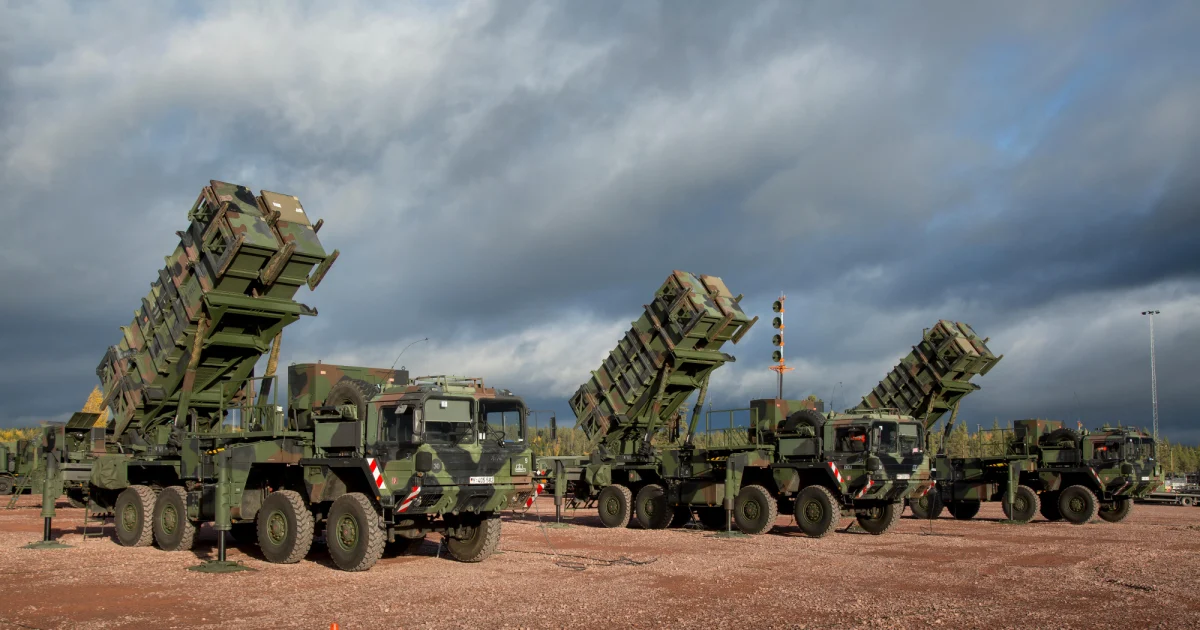
Patriot / © Ukrainian Military Portal
Granting Ukraine a license to produce missiles for Patriot systems could be a significant step, but it will not solve the interceptor shortage problem swiftly.
This is reported by WELT.
During the NATO summit, U.S. President Donald Trump announced the readiness to permit Ukraine to independently manufacture missiles for Patriots.
However, defense experts caution that establishing such production is considerably more complex than it might appear.
According to missile analyst Markus Schiller, Ukraine might need one to two years before the first missiles are ready for use.
He suggests that Ukrainian enterprises could produce certain components, particularly engines, while the intricate electronics would continue to be sourced from the U.S.
Why Production May Be Delayed
Globally, only a few sites manufacture Patriots under American license.
In Japan, initiating such production took approximately five years. In Germany, the first European plant began construction in 2024, with initial deliveries scheduled only for 2027.
To commence production, the following are necessary:
-
Agreeing on technology transfer with the U.S.;
-
Establishing a specialized facility;
-
Importing sensitive equipment;
-
Certifying suppliers;
-
Setting up manufacturing lines.
Even with political will, this process could take at least a year.
It is Unknown Which Specific Missiles Will Be Permitted for Production
Another crucial question is which specific version of the Patriot Ukraine will be able to manufacture.
This could refer to either PAC-2 missiles, which have a fragmentation warhead, or the more advanced PAC-3, which destroy targets through direct impact.
The PAC-3 is optimized for intercepting ballistic missiles and has already been used by Ukraine against Iskanders and Kinzhals.
Concurrently, the manufacturer of PAC-3, Lockheed Martin, has not previously supported full-scale production of these missiles in Europe. Therefore, it remains unclear whether Ukraine will receive permission for this specific modification.
Why This Will Not Immediately Solve the Problem
Ukraine currently relies heavily on foreign-produced missiles, while global Patriot production volumes remain limited.
According to Volodymyr Zelenskyy, approximately 60–65 such missiles are produced worldwide per month, which is insufficient for Ukraine’s needs.
Domestic production could shorten supply chains, expedite repairs, and reduce dependence on allies.
However, experts emphasize that even after obtaining a license, Patriot production will not be able to quickly address the interceptor deficit. Consequently, Ukraine continues to require ready-made missiles now.
Ukraine Will Produce Missiles for Patriots: What is Known
As a reminder, Ukraine has moved closer to the possibility of producing interceptor missiles for Patriot systems following U.S. President Donald Trump’s statement about his readiness to grant the relevant license.
At the same time, analysts from the Institute for the Study of War caution that initiating such production may take a considerable amount of time. It is currently unknown which specific missiles are involved — the more modern PAC-3 or the simpler PAC-2.
According to ISW estimates, even after obtaining the license for production setup and the release of the first missiles, Ukraine may require at least a year to a year and a half.
Analysts warn that Russia could exploit this interim period to intensify ballistic missile strikes, as Ukraine is already experiencing a shortage of Patriot interceptors.
Comments Sort: New Old Popular Send