

The USA may start buying Belarusian potash. Why might Trump take such a step and what does it mean for Ukraine?
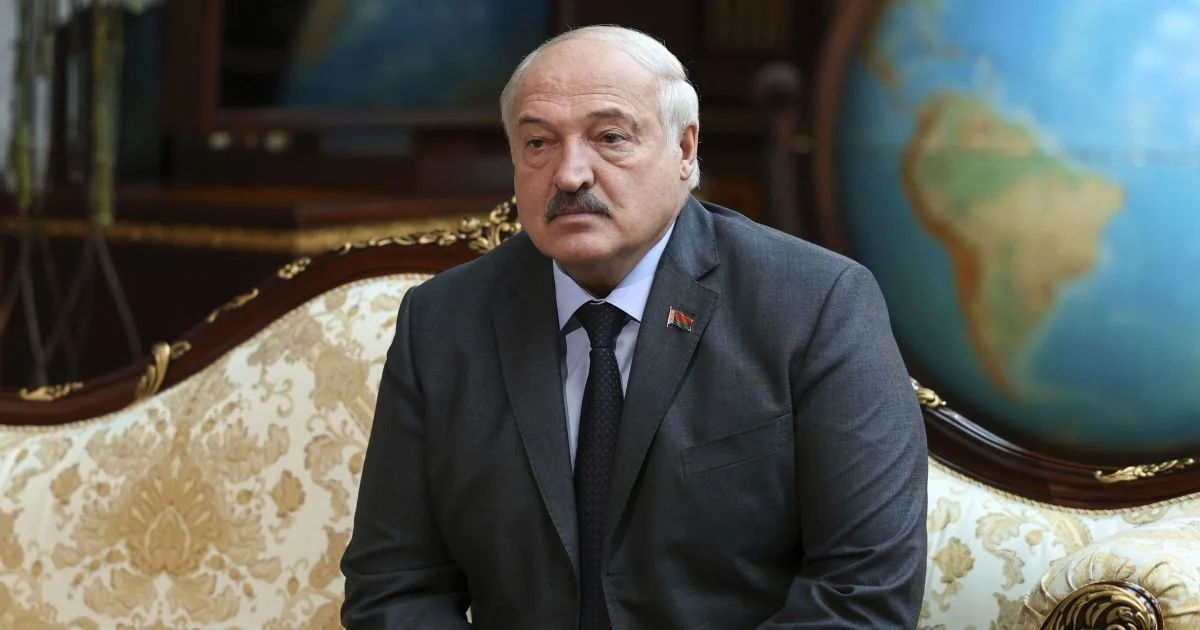
Dictator Lukashenko / © Associated Press
A potential relaxation of sanctions against the Belarusian potash sector could become not just an economic deal, but also a tool for the gradual dismantling of the Western sanctions regime against Belarus and Russia.
This is reported by TSN.ua, citing an analytical material by American researchers from the Robert Lansing Institute.
Analysts point out that at the end of 2025 and the beginning of 2026, the US Treasury Department’s Office of Foreign Assets Control (OFAC) partially eased restrictions on the Belarusian potash sector and certain financial institutions. According to Reuters and Associated Press, these steps were linked to agreements on the release of political prisoners in Belarus.
At the same time, Alexander Lukashenko announced his readiness to sell the Nezhinsky Mining and Processing Plant, one of Belarus’s largest undeveloped potash projects, to American investors. As we wrote earlier, Bloomberg journalists emphasized that Washington was allegedly promoting the issue of resuming supplies of Belarusian potash and discussing it with Ukraine and European partners.
Why the USA is interested in Belarusian potash
Potash is one of the key components in fertilizer production, and its cost directly affects the expenses of American farmers. Furthermore, the USA is largely dependent on potash imports from Canada: in 2024–2026, its share ranged from 79% to over 90% of American imports.
According to the study’s authors, Belarus is trying to use this as an argument, offering itself as an alternative supplier while simultaneously opening access for American capital to a strategic asset.
Analysts also suggest that for US President Donald Trump, such a deal could be perceived as a political success – the release of political prisoners, access to a strategic resource, and a potential reduction in fertilizer prices for American agrarians.
What Russia wins
For Moscow, a potential potash deal has significance that goes far beyond economics. The Kremlin’s main goal is to create a political precedent.
If the USA agrees to ease sanctions against an economic sector of a country that supports Russia’s war against Ukraine, it will signal that sanctions can be viewed not as a principled response to aggression and violations of international law, but as a subject of bargaining.
This opens up several opportunities for Russia.
Firstly, the unity of the West could be undermined. If Washington begins to pressure Ukraine and European countries to resume transit of Belarusian potash, this could cause tensions between the USA, Ukraine, Poland, Lithuania, and other EU countries.
Secondly, the logic of sanctions policy itself is weakened. Restrictions on Belarus were part of a broader system of deterring Russian influence. Their easing creates a dangerous precedent.
Thirdly, one of the Kremlin’s key allies receives economic benefits. Belarus traditionally depends heavily on revenue from potash exports.
Fourthly, Moscow gains the opportunity to test mechanisms for circumventing sanctions, financial settlements, logistics, and political agreements, which could be used for Russian companies in the future.
Fifthly, Lukashenko receives partial international rehabilitation and an exit from political isolation, which simultaneously weakens the position of the Belarusian democratic opposition.
What are the risks for Ukraine
Moscow is interested not so much in the sale of a specific asset as in creating a precedent. If the USA agrees to further ease sanctions in exchange for access to Belarusian potash, it could signal that sanctions can be used as a subject of political bargaining.
The authors emphasize that after the events of 2020 and the start of the full-scale war by the Russian Federation against Ukraine, Belarus has become even more dependent on Moscow in terms of security, finances, energy, and military support. Therefore, any large-scale agreements between Minsk and Washington cannot be considered separately from the Kremlin’s interests.
According to analysts, the resumption of full revenues for Belarus from potash exports will strengthen Lukashenko’s regime, which has provided Russia with its territory, infrastructure, and political support since the beginning of the war.
Furthermore, potential US pressure on Ukraine and European countries to resume the transit of Belarusian potash could cause new contradictions within the Western coalition.
The study also highlights that Poland, Lithuania, Latvia, and Estonia increasingly perceive Belarus not as a neutral trading partner, but as a military-political ally of Russia.
“The greatest danger is that Washington may perceive a tactical business opportunity as a strategic breakthrough,” the study states.
According to the authors, any normalization of economic relations with Minsk without fundamental changes in Belarus’s political course could weaken Ukraine’s position, strengthen a Kremlin ally, and create a precedent that Russia will try to use to further weaken Western sanctions.
Author: Olga Konsevych
Comments Sort: New Old Popular Send