

The global oil markets reacted with a price collapse to the announced reopening of the Strait of Hormuz.
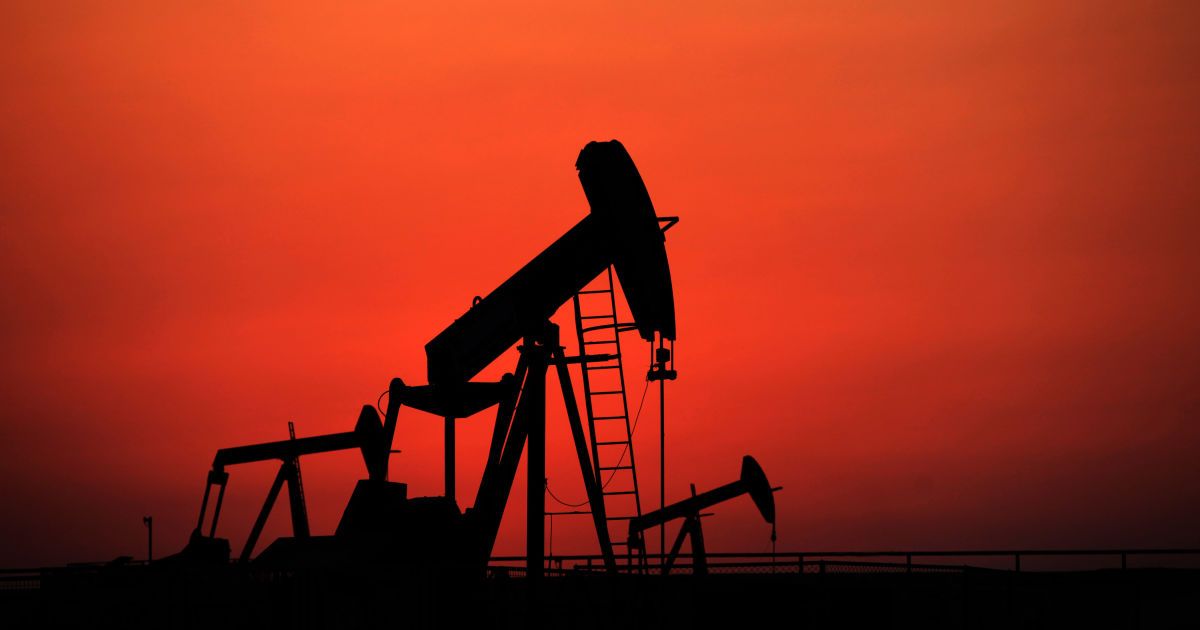
Oil Production / © Associated Press
Oil prices on June 15 fell to a three-month low amid news of a preliminary peace agreement between the US and Iran. The parties agreed to resume navigation through the strategic Strait of Hormuz.
Reuters reported this.
Prices for Brent crude oil futures decreased by $3.65, or 4.2%, and at 06:30 GMT stood at $83.68 per barrel. West Texas Intermediate, an American oil, depreciated by $4.13, or 4.9%, to $80.75 per barrel. Both contracts dropped to their lowest levels since March 10, after having already lost over 3% on June 12.
The United States and Iran are set to sign a memorandum of understanding in Switzerland this Friday, as announced by the Prime Minister of Pakistan, who mediated the negotiations.
US President Donald Trump stated on June 14 that the Strait of Hormuz would be open “free for passage,” and the United States would cease the maritime blockade of Iranian ports.
According to the semi-official Iranian agency Mehr, the draft agreement envisages the resumption of operations in the Strait of Hormuz within 30 days under Iranian control.
“The geopolitical risk premium that was baked into oil prices is now coming off quite aggressively as traders price in the prospect of oil flows resuming,” said Tim Waterer, chief market analyst at KCM Trade.
The global market has lost millions of barrels of oil and gas since the war began, which had blocked the Strait of Hormuz – a key route through which about a fifth of global oil and liquefied natural gas supplies pass – for over three months.
Market participants are also monitoring the pace at which Middle Eastern producers can resume extraction and exports after wartime damage, as well as the return of shipping to the region.
“While these uncertainties point to upside risks to our Brent forecast of $80/bbl by year-end, it is worth noting that for the market to return to its pre-war state of oversupply, only for oil flows through the Strait of Hormuz to reach 60-70% of pre-war levels is sufficient,” noted Vivek Dhar, a mining commodities strategist at Commonwealth Bank of Australia, in his note.
Iranian Deputy Foreign Minister Kazem Gharibabadi stated that a broader format of the agreement would be discussed during a 60-day ceasefire period.
The E4 countries – the UK, France, Germany, and Italy – announced on June 14 their readiness to lift sanctions against Iran in exchange for steps on its part regarding the nuclear program.
“Beyond the immediate price reaction, the focus will now shift to the pace of actual supply normalization and adherence to the deal. While the conflict may be over and oil flows through the Strait of Hormuz may gradually return to normal, the damage inflicted cannot be undone overnight. This applies not only to the physical damage to oil infrastructure but also to the economic pressure that oil-importing countries have faced due to elevated energy costs over the past few months,” said Priyanka Sachdeva, senior market analyst at Phillip Nova.
Peace Agreement Between the US and Iran – What is Known
We remind you that the US and Iran have announced the conclusion of a peace agreement, which entails an immediate cessation of hostilities, particularly in Lebanon. Pakistan acted as mediator in the negotiations with the support of Qatar, Saudi Arabia, and Turkey. Trump confirmed that after the official signing of the document, scheduled for June 19 in Switzerland, the maritime blockade of Iran would be lifted, and free navigation through the Strait of Hormuz would be restored. Tehran has officially confirmed the agreement.
The US President also emphasized that the agreement would not allow Iran to obtain nuclear weapons, being the complete opposite of previous agreements during the administration of Barack Obama.
Comments Sort: New Old Popular Send