

The support for Donald Trump, once considered an advantage by the European right, is increasingly becoming a liability. Ahead of major elections in Europe, some of his former allies are starting to distance themselves.
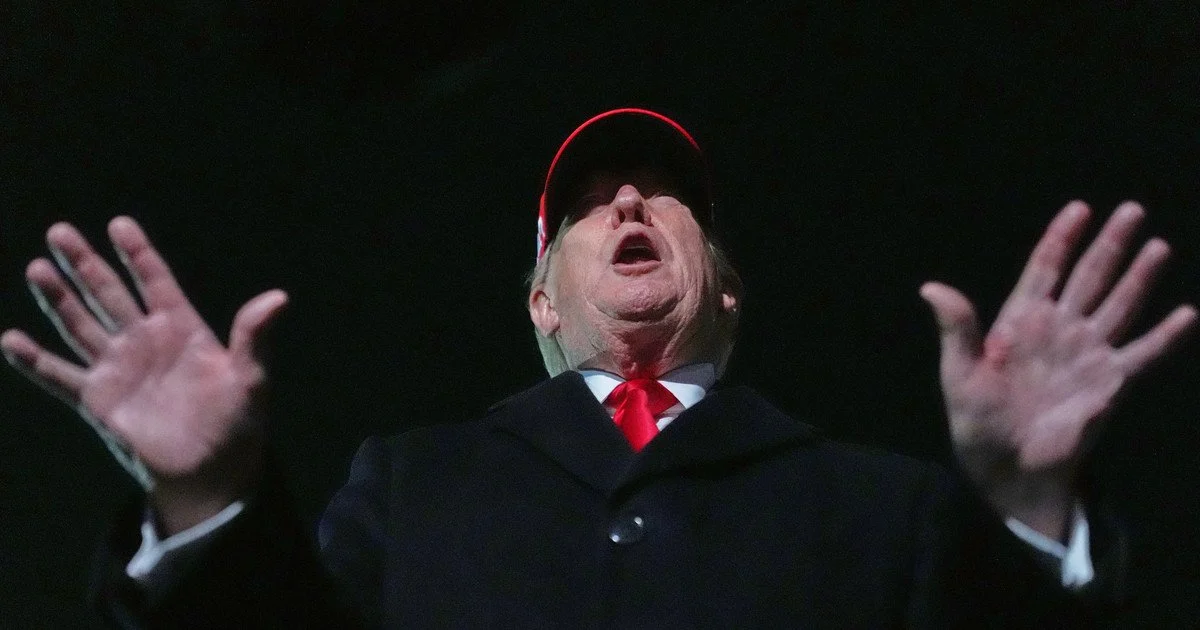
Donald Trump / © Associated Press
European right-wing figures who previously openly displayed their closeness to Donald Trump are increasingly attempting to distance themselves from the US president. Trump’s endorsement, once a perceived political asset for them, might now cost them votes.
As Politico reports, Trump’s reputation in Europe has significantly deteriorated due to trade wars, threats concerning Greenland, and the conflict with Iran, which caused energy prices to surge.
His interference in European politics, once welcomed by ideological allies, is now more frequently viewed as a risk. It could alienate moderate voters, fracture the nationalist electorate, and provide ammunition for political opponents.
One of the most telling examples is Italian Prime Minister Giorgia Meloni. She was long considered Trump’s most prominent ally in Europe. However, after the US president claimed she had “begged” him for a photo opportunity at the G7 summit, Meloni responded sharply.
Commenting on Trump’s remarks about her popularity, she stated that a friendship with him had “certainly not helped her” and advised the US president to focus on his own approval ratings.
A similar stance is adopted by French politician Jordan Bardella, the leader of the far-right National Rally and a potential presidential contender. In an interview with POLITICO, he rejected Trump’s endorsement and described the US president’s behavior as “unpredictable.”
According to Jean-Yves Dormagen, president of the polling institute Cluster17, supporting Trump has become a “poisoned gift” for European nationalists.
A Cluster17 poll conducted in seven EU countries revealed that even among right-wing voters, only a minority considers Trump a “friend of Europe.” This sentiment was shared by 18% of National Rally voters, 23% of Meloni’s Brothers of Italy party voters, and 25% of supporters of Germany’s AfD.
Another poll by Public First for POLITICO in June indicated that only 31% of AfD voters and 36% of National Rally supporters view the US as a “reliable ally.”
The paradox is that the very political forces the Trump administration sought to court are now beginning to distance themselves from him. The White House previously welcomed the “rise of patriotic European parties” and offered public and behind-the-scenes support to such movements.
The most notable shift is evident in Italy and Germany, where the far-right has traditionally shown favor to the US president. Meloni, after Trump’s re-election, attempted to position herself as a bridge between Europe and Washington, but their relationship has now devolved into public disputes.
In Germany, the conflict with Iran has only deepened the trust crisis between Trump and the far-right. As early as spring, AfD leaders advised party officials to reduce trips to the US in the run-up to crucial regional elections.
However, not all European right-wing parties are severing ties with Trump. Poland’s Law and Justice party continues to cultivate relations with the US president, given that Poland remains a close military ally of Washington and one of Europe’s largest purchasers of American weaponry.
According to analysts, good relations with Trump still offer more advantages than risks for the Polish right. Nevertheless, the overall trend in Europe is shifting: support for the US president increasingly appears to be a political burden rather than a bonus.
It was previously reported that Italian Prime Minister Giorgia Meloni, long hailed as Donald Trump’s most devoted European ally, has drastically altered her tone in relations with the US president. Meloni had previously avoided public criticism of Trump, even in the face of his controversial statements and actions. However, following their latest conflict, she accused him of misrepresenting events and indulging America’s and the West’s adversaries.
Comments Sort: New Old Popular Send