

One of NATO’s key allies, Germany, has pledged to build the strongest army in Europe.
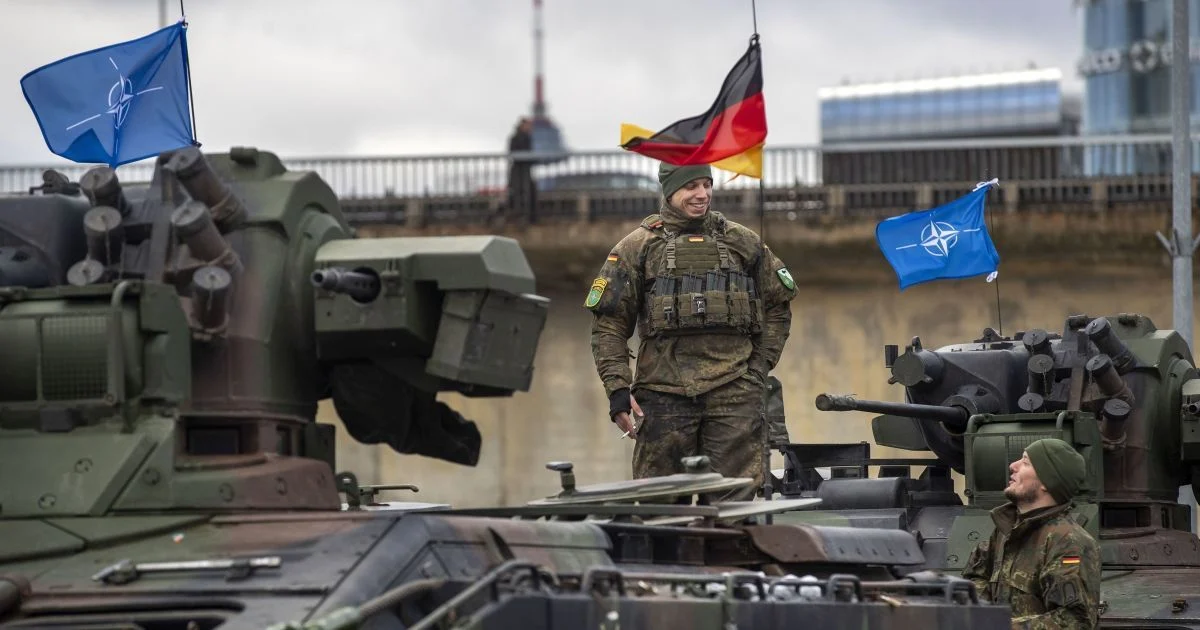
German Army. / © Associated Press
Germany is committed to becoming a more formidable military power within NATO. Berlin is ready to assume greater responsibility for European security after decades where the United States bore a significant portion of the alliance’s military burden.
This was stated by the German Ambassador to the United States, Jens Plötner, in an interview with Fox News Digital.
According to Plötner, “Germany is stepping up.” The country’s armed forces are set to become the strongest military in Europe, representing Germany’s new military strategy.
“Russia’s illegal aggressive war has shaken old perceptions in Europe and Germany, as the international rules we relied upon are being challenged. This alters the strategic environment in which we operate,” Plötner remarked.
He emphasized that Germany’s decision to become Europe’s strongest conventional army, firmly anchored in the NATO alliance, is also a “permanent commitment.”
Escalation between the US and Germany
The publication highlights that these efforts are unfolding against the backdrop of public friction between President Donald Trump and Chancellor Friedrich Merz. This dispute, according to an American defense expert, could complicate critical decisions regarding deterrence against Russia.
Tensions intensified after Merz criticized Washington’s actions regarding the war in Iran, stating that the US was being “humiliated” by Tehran in negotiations, and questioning the Trump administration’s exit strategy.
The dispute quickly spilled over into NATO policy. Trump later threatened to reconsider potential reductions in US troops in Germany and stated that Merz should spend more time stopping the war in Ukraine and “rebuilding his shattered country” rather than commenting on Iran.
Retired Rear Admiral Mark Montgomery criticized recent American steps to delay or potentially cancel rotational deployments of long-range strike systems to Germany. According to him, these would include capabilities like Tomahawk, SM-6, or precision-guided missiles. Reuters reported in May that the German Ministry of Defense stated there had been “no final cancellation” of the deployment.
A source familiar with the matter indicated that despite briefings on possible reductions in US involvement, defense relations between the US and Germany remain strong, with close cooperation.
Europe’s Future Defense Industrial Base
“Germany’s development of a large, impressive defense industrial base is good for NATO, good for the security of the West, and even good for our allies,” Montgomery stated, arguing that Germany, rather than Poland, France, or the United Kingdom, is most likely to become the “heart” of Europe’s future defense industrial base.
Germany has long played a central role in the US military presence in Europe. Plötner pointed to Ramstein Air Base, the Landstuhl Regional Medical Center, and the Grafenwöhr training area as examples of Germany’s continued importance for American power projection and NATO deterrence.
At the 2025 NATO Summit in The Hague, allies agreed to invest 5% of GDP annually in defense and defense-related spending by 2035, including core military expenditures and broader security investments. Merz stated at the time that, according to the German government, this decision was aimed at protecting “freedom, security, and prosperity.”
Plötner said Germany is already moving towards achieving this standard, stating that Berlin will increase defense spending to 5% of GDP “long before” 2035 and recruit nearly 100,000 new active-duty soldiers for the Bundeswehr.
One of Germany’s most notable commitments is its permanent brigade in Lithuania, which is expected to comprise approximately 5,000 German military and civilian personnel. The Bundeswehr states that these forces are intended to become fully operational for the defense of NATO’s eastern flank in the Baltic region within three years.
Plötner described the brigade as one of Germany’s “signature efforts” to assure Baltic allies that NATO will “defend every inch of allied territory.”
For Germany, the changes involve more than just money. It represents a political and cultural break from decades of caution regarding military power. For the United States, it is also a test of whether an ally long criticized by Trump and other US leaders for under-spending can now become the European pillar Washington requires.
According to Plötner, this is precisely what Berlin intends to pursue: “NATO will remain transatlantic in its core, but over the next decade, it will become more European.”
As a reminder, The New York Times reports that the United States intends to significantly reduce the scope of military forces and assets currently supporting NATO operations on the European front. According to the publication, in early June, the American side handed over a document to its allies outlining plans to reduce a number of military capabilities in Europe.
Comment Sort: New Old Popular Send