

The statement made by Hagseth during the security forum in Singapore was another indication that the Trump administration is shifting its focus to the Indo-Pacific region and demonstrating antagonism towards Europe and NATO.
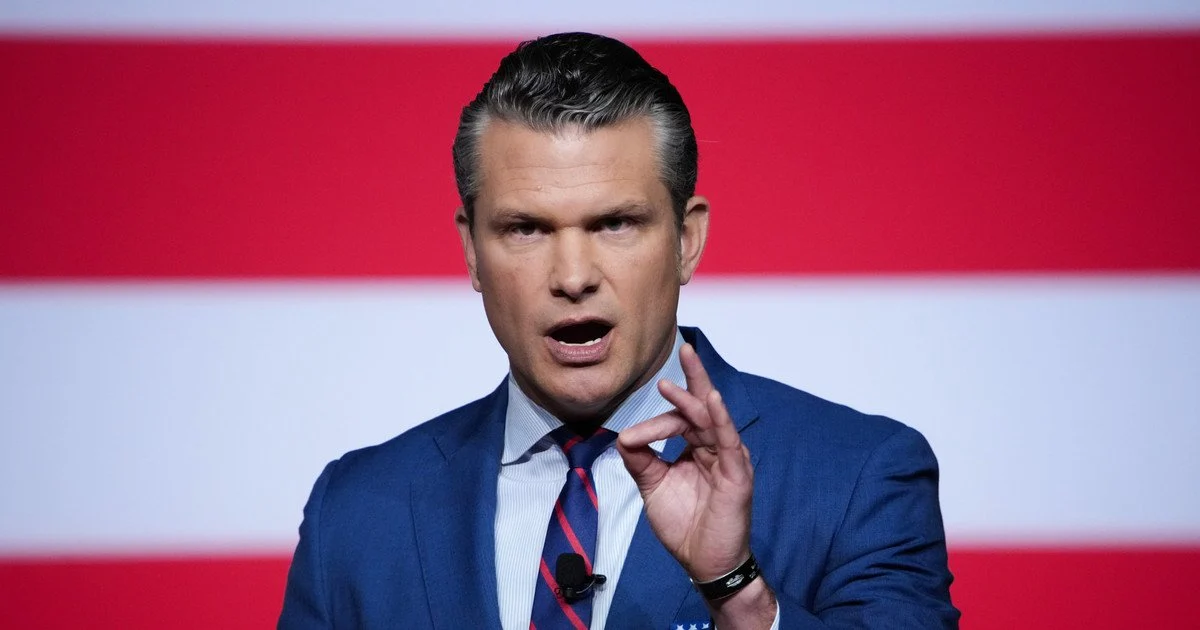
U.S. Secretary of Defense Pete Hagseth / © Associated Press
During his speech at the Asian security forum “Shangri-La Dialogue” in Singapore, the head of the Pentagon, Pete Hagseth, made a series of high-profile statements that demonstrate Washington’s new foreign policy course.
The change in priorities of the American administration is reported by Bloomberg.
Criticism of Europe and Praise for Allies in Asia
The US Secretary of Defense specifically commended allies such as South Korea, Japan, and the Philippines for “intensifying” their defense efforts. At the same time, he sharply criticized European countries, stating that they have “opened their borders and emptied their armies.”
According to Hagseth, the Asian perspective on America is much more pragmatic and understandable than in other regions. He emphasized that partnerships in Asia are based on a “concrete convergence of national interests,” rather than “idealistic values.”
Against this backdrop, it is expected that Washington may reduce its support for the European continent. In particular, US President Donald Trump has already announced the withdrawal of 5,000 troops from Germany and expressed disappointment that countries like Italy are not granting access to their bases for American operations.
Furthermore, Spain, which has particularly irritated Trump, became the only country to receive an exemption from NATO’s new defense spending target of 5%. This has fueled rumors that the US may reduce its presence at the Rota or Moron bases. Currently, approximately 85,000 American soldiers are stationed in Europe.
Despite this, the head of NATO’s Military Committee, Admiral Giuseppe Cavo Dragone, attempted to downplay the tension, stating that there is no “drama” in relations with the US and that the Alliance has already responded to the demands for increased military spending.
Closer Ties with China and a “Forgotten” Taiwan
Hagseth underscored the importance of “personal diplomacy” between Trump and Chinese leader Xi Jinping following their recent meeting in Beijing. He also used the term “constructive strategic stability,” which emerged precisely from the summit’s outcomes. As noted by Professor Daisuke Kawai of Tokyo University, the use of this term indicates a softening of Washington’s stance on China and may cause concern among some countries in the region.
However, the biggest surprise was that the head of the Pentagon did not mention Taiwan – the main “red line” in relations between the two superpowers – even once in his prepared speech. This marked the first such omission by a US Secretary of Defense at the Singapore forum in at least a decade.
In comparison, Hagseth himself mentioned Taiwan at least five times in his speech last year. His predecessor, Lloyd Austin, mentioned this global chip manufacturing hub five times in 2023 and once the year before.
Journalists recall that during their meeting in Beijing, Xi Jinping warned Trump that mishandling the Taiwan issue could lead to conflict. Following this, the American leader postponed the approval of a $14 billion arms package for Taiwan, which included a significant enhancement of air defense capabilities.
Later, Hagseth explained to reporters that the US position on Taiwan remains unchanged, and only “how we talk about it” has changed. He described this updated approach to the island as “strong, quiet, but clear.” Furthermore, the minister emphasized that the delay in the arms package for Taiwan should be separated from the issue of ammunition supply, as American reserves are currently in excellent condition.
Incident with a Chinese Delegate and the Situation in the Middle East
During the forum, Hagseth also addressed his Chinese counterpart, Defense Minister Dong Jun, with warm words. Dong Jun was skipping the event for the second consecutive year. Hagseth expressed hope for future meetings and communication.
At one point, a Chinese delegate, Wang Dong from Peking University, asked the American minister to comment on a recent statement by the Commander of US Forces in Korea, General Paul LaCamera, who in a podcast called South Korea a “dagger in the heart of Asia.” Beijing interpreted these words as hostile and aggressive. LaCamera, who was present in the hall, responded to the delegate personally and very calmly, explaining that his comment pertained to the changing perspectives in the region and urged the Chinese representative to listen to his entire speech.
Additionally, during the event, the US Secretary of Defense provided no new information regarding negotiations with Iran or the missile strike that injured several Americans. He only stated that Washington is prepared to intensify its efforts if Tehran’s leaders attempt to acquire nuclear weapons and confirmed that the naval blockade of the Strait of Hormuz remains in effect.
As a reminder, Hagseth intrigued with a statement about Ukraine. The head of the Pentagon assured that the US is interested in Ukraine maintaining its ability to resist Russian aggression.
Comments Sort: New Old Popular Send